Buy mentorcoaching.eu ?
We are moving the project
mentorcoaching.eu .
Are you interested in purchasing the domain
mentorcoaching.eu ?
domain@kv-gmbh.de · 0541-91531010
Buy mentorcoaching.eu ?
How does child development progress in space?
Child development in space is a relatively new area of study, as there have been limited opportunities for children to live and grow in space environments. However, research suggests that the lack of gravity in space may impact the physical development of children, as it can affect bone density and muscle strength. Additionally, the social and emotional development of children in space may be influenced by the unique challenges and limitations of living in a confined and isolated environment. Further research is needed to fully understand how child development progresses in space and to ensure the well-being of children living in such environments. **
Can complexity be objectively measured?
Complexity can be objectively measured to some extent, especially in the context of information theory and algorithmic complexity. In information theory, complexity can be measured using metrics such as entropy and Kolmogorov complexity, which provide objective measures of the amount of information or computational resources required to describe a system. However, when it comes to measuring the complexity of real-world systems or phenomena, there is often a subjective element involved, as different observers may prioritize different aspects of complexity. Therefore, while certain aspects of complexity can be objectively measured, the overall assessment of complexity may still involve some degree of subjectivity. **


Similar search terms for Space complexity
Top-Angebote
Products related to Space complexity:
-
Practical Inspiration Publishing Not Optional Applying Cultural Intelligence To Lead Through Complexity And Change - Non Fiction - PaperbackTitle:. Not Optional: Applying Cultural Intelligence to Lead Through Complexity and Change Format: Paperback Overview:. In today’s rapidly shifting professional landscape, managing diverse teams and navigating uncharted organizational terrain are no longer optional luxuries; they are essential skills. This compelling non-fiction business book presents a transformative approach to overcoming the inherent challenges of complexity and change. Central to this guide is the concept of cultural intelligence—a multifaceted leadership competency that enables managers to decode unfamiliar social cues, communicate effectively across differences, and foster cohesive workplaces. By exploring the dynamic connection between cultural awareness and strategic execution, the text offers a practical roadmap for professionals aiming to thrive amid ambiguity. Readers will discover how to dismantle barriers, align disparate viewpoints, and cultivate environments where innovation flourishes despite pressure. Rather than relying on rigid frameworks that crumble under stress, this publication equips you with adaptive strategies that evolve alongside your industry. It bridges the gap between theoretical models and real-world application, empowering you to make confident decisions that respect human nuances while driving measurable performance. By integrating these principles into your daily routine, you transform potential friction into synergy, building a resilient foundation that sustains growth even when conditions shift unexpectedly. What Makes This Book Stand Out:. Unlike traditional management resources that address culture and change as separate topics, this volume uniquely weaves them together into a unified strategy for modern leadership. The author demonstrates that complexity often stems from overlooked cultural misalignments and that successful change management depends entirely on a leader’s ability to read and respond to human dynamics. By treating cultural intelligence as a mandatory requirement for effectiveness, the book removes the guesswork from difficult conversations and global collaborations. You receive step-by-step guidance on identifying hidden assumptions, breaking down communication silos, and establishing inclusive protocols that accelerate project timelines. The approach remains highly practical, steering clear of dense academic jargon in favor of clear, actionable advice that can be implemented immediately. Furthermore, the focus on translating empathy into operational results ensures that you are not just improving team morale but actively enhancing overall business productivity. This unique blend of psychological insight and managerial pragmatism creates a versatile masterclass for any leader dedicated to forging ahead with clarity and purpose. Who This Book Is Perfect For:. This paperback collection of leadership wisdom is an ideal investment for mid-level managers, executive directors, and frontline supervisors who oversee diverse...19,99 £*Shipping: 2,99 £Secure redirect to the provider
-
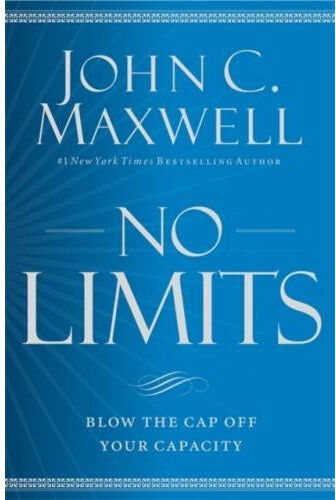
Little Brown Book Group No Limits: Blow the Cap Off Your Capacity by John C. Maxwell – Personal Growth & Leadership Development GuideNo Limits: Blow the CAP Off Your Capacity Description We often treat the word capacity as if it were a natural law of limitation. Unfortunately; most of us are much more comfortable defining what we perceive is off limits rather than what's possible. Could it be that many people have allowed what they perceive as capacity to define them? Have they allowed their perception to limit their attitudes about their potential? In his newest book; John Maxwell identifies 17 core capacities. Some of these are abilities we all already possess; such as energy; creativity and leadership. Others are aspects of our lives controlled by our choices; like our attitudes; character; and intentionality. Maxwell examines each of these 17 capacities; and provides clear and actionable advice on how you can increase your potential in each. He will guide you on how to identify; grow; and apply your critical capacities to your daily life. Once you've blown the 'cap' off your capacities; you'll find yourself more successful--and fulfilled--in your daily life.5,99 £*Shipping: 2,99 £Secure redirect to the provider
-
Tiny Tots Teens Trends Crawling Doll Baby Toy With Music, Early Education Crawling Guidance, Head Up Training Toy For Babies yellowIntroduce your baby to a fun and educational experience with our Crawling Doll Baby Toy with Music. This delightful toy is designed to guide babies as they learn to crawl, promoting early development and coordination. Fun guidance for babies to...29,97 $*Shipping: 0,00 $Secure redirect to the provider
-
DESIGN ART "Designart ""Gold Purple Transcending Complexity II"" Abstract Curtain - Blackout Abstract Curtain - 1 Panel""Bring a breath of fresh air to your windows and spruce up any space in your home with this ""Gold Purple Transcending Complexity II"" Abstract 1 panel curtain. This beautiful Modern & Contemporary curtain is handmade on demand just for you."83,36 $*Shipping: 0,00 $Secure redirect to the provider



-
What is the complexity of Mergesort?
The time complexity of Mergesort is O(n log n) in the worst-case scenario, where n is the number of elements in the array. This complexity arises from the fact that Mergesort divides the array into halves recursively and then merges them back together in sorted order. The space complexity of Mergesort is O(n) due to the need for additional space to store the divided subarrays during the sorting process. Overall, Mergesort is an efficient sorting algorithm that performs well on large datasets. **
-
How can one get rid of complexity?
One can get rid of complexity by breaking down the problem or situation into smaller, more manageable parts. This can help to identify the root causes of the complexity and address them individually. Additionally, simplifying processes, communication, and decision-making can help reduce complexity. It is also important to prioritize and focus on the most important aspects, while letting go of unnecessary details. Finally, seeking input and collaboration from others can provide fresh perspectives and help to streamline complex situations. **
-
What is the complexity of composing two functions?
Composing two functions has a complexity of O(1), as it involves simply applying one function to the output of the other. The time complexity does not depend on the size of the input, as the functions are applied sequentially. Therefore, the complexity of composing two functions is constant and does not increase with the size of the input. **
-
What are the Big O notations for time complexity?
The Big O notations for time complexity are used to describe the upper bound on the growth rate of an algorithm's running time as the input size increases. Some common Big O notations include O(1) for constant time complexity, O(log n) for logarithmic time complexity, O(n) for linear time complexity, O(n^2) for quadratic time complexity, and O(2^n) for exponential time complexity. These notations help in analyzing and comparing the efficiency of different algorithms. **


How do you determine the complexity of a function?
The complexity of a function can be determined by analyzing its time and space requirements. This can be done by examining the number of operations the function performs and the amount of memory it uses. Additionally, the complexity can be influenced by the size of the input data and the efficiency of the algorithm used in the function. By considering these factors, one can determine the complexity of a function, which is often expressed using Big O notation. **
What are the Landau symbols for the time complexity?
The Landau symbols for time complexity are commonly used to describe the upper and lower bounds of an algorithm's running time. The most commonly used Landau symbols for time complexity are O (big O) for upper bound, Ω (big omega) for lower bound, and Θ (big theta) for both upper and lower bounds. These symbols are used to express the growth rate of an algorithm's running time in terms of the input size. For example, if an algorithm has a time complexity of O(n^2), it means that the running time of the algorithm grows no faster than n^2 as the input size increases. **
Top-Angebote
Products related to Space complexity:
-
DESIGN ART "Designart ""Gold Purple Transcending Complexity II"" Abstract Curtain - Blackout Abstract Curtain - 1 Panel""Bring a breath of fresh air to your windows and spruce up any space in your home with this ""Gold Purple Transcending Complexity II"" Abstract 1 panel curtain. This beautiful Modern & Contemporary curtain is handmade on demand just for you."72,42 $*Shipping: 0,00 $Secure redirect to the provider
-
Space Cowboys Splendor 2024 Refresh - Strategic Merchant Development GameBuild a powerful merchant empire in this strategic development game set along the historic Silk Road. In Splendor, players collect gemstone tokens and use them to acquire development cards. Each development provides a lasting bonus, helping reduce the cost of future purchases and expanding your access to more valuable cards. As your influence grows, you may attract noble patrons whose requirements can bring valuable prestige points. Plan your purchases carefully, manage your resources, and compete to become the most prestigious merchant. Key features include collecting gemstone tokens, acquiring development cards, and using those bonuses to make later purchases more efficiently. Attract noble patrons by meeting their development requirements and reach the required prestige total to trigger the end of the game. This refresh of the classic title by Space Cowboys is designed for tabletop gaming sessions with family and friends, offering strategic rules that are accessible to new players while providing meaningful depth.24,99 £*Shipping: 3,95 £Secure redirect to the provider
-
Practical Inspiration Publishing Not Optional Applying Cultural Intelligence To Lead Through Complexity And Change - Non Fiction - PaperbackTitle:. Not Optional: Applying Cultural Intelligence to Lead Through Complexity and Change Format: Paperback Overview:. In today’s rapidly shifting professional landscape, managing diverse teams and navigating uncharted organizational terrain are no longer optional luxuries; they are essential skills. This compelling non-fiction business book presents a transformative approach to overcoming the inherent challenges of complexity and change. Central to this guide is the concept of cultural intelligence—a multifaceted leadership competency that enables managers to decode unfamiliar social cues, communicate effectively across differences, and foster cohesive workplaces. By exploring the dynamic connection between cultural awareness and strategic execution, the text offers a practical roadmap for professionals aiming to thrive amid ambiguity. Readers will discover how to dismantle barriers, align disparate viewpoints, and cultivate environments where innovation flourishes despite pressure. Rather than relying on rigid frameworks that crumble under stress, this publication equips you with adaptive strategies that evolve alongside your industry. It bridges the gap between theoretical models and real-world application, empowering you to make confident decisions that respect human nuances while driving measurable performance. By integrating these principles into your daily routine, you transform potential friction into synergy, building a resilient foundation that sustains growth even when conditions shift unexpectedly. What Makes This Book Stand Out:. Unlike traditional management resources that address culture and change as separate topics, this volume uniquely weaves them together into a unified strategy for modern leadership. The author demonstrates that complexity often stems from overlooked cultural misalignments and that successful change management depends entirely on a leader’s ability to read and respond to human dynamics. By treating cultural intelligence as a mandatory requirement for effectiveness, the book removes the guesswork from difficult conversations and global collaborations. You receive step-by-step guidance on identifying hidden assumptions, breaking down communication silos, and establishing inclusive protocols that accelerate project timelines. The approach remains highly practical, steering clear of dense academic jargon in favor of clear, actionable advice that can be implemented immediately. Furthermore, the focus on translating empathy into operational results ensures that you are not just improving team morale but actively enhancing overall business productivity. This unique blend of psychological insight and managerial pragmatism creates a versatile masterclass for any leader dedicated to forging ahead with clarity and purpose. Who This Book Is Perfect For:. This paperback collection of leadership wisdom is an ideal investment for mid-level managers, executive directors, and frontline supervisors who oversee diverse...19,99 £*Shipping: 2,99 £Secure redirect to the provider
-
Little Brown Book Group No Limits: Blow the Cap Off Your Capacity by John C. Maxwell – Personal Growth & Leadership Development GuideNo Limits: Blow the CAP Off Your Capacity Description We often treat the word capacity as if it were a natural law of limitation. Unfortunately; most of us are much more comfortable defining what we perceive is off limits rather than what's possible. Could it be that many people have allowed what they perceive as capacity to define them? Have they allowed their perception to limit their attitudes about their potential? In his newest book; John Maxwell identifies 17 core capacities. Some of these are abilities we all already possess; such as energy; creativity and leadership. Others are aspects of our lives controlled by our choices; like our attitudes; character; and intentionality. Maxwell examines each of these 17 capacities; and provides clear and actionable advice on how you can increase your potential in each. He will guide you on how to identify; grow; and apply your critical capacities to your daily life. Once you've blown the 'cap' off your capacities; you'll find yourself more successful--and fulfilled--in your daily life.5,99 £*Shipping: 2,99 £Secure redirect to the provider
-
How does child development progress in space?
Child development in space is a relatively new area of study, as there have been limited opportunities for children to live and grow in space environments. However, research suggests that the lack of gravity in space may impact the physical development of children, as it can affect bone density and muscle strength. Additionally, the social and emotional development of children in space may be influenced by the unique challenges and limitations of living in a confined and isolated environment. Further research is needed to fully understand how child development progresses in space and to ensure the well-being of children living in such environments. **
-
Can complexity be objectively measured?
Complexity can be objectively measured to some extent, especially in the context of information theory and algorithmic complexity. In information theory, complexity can be measured using metrics such as entropy and Kolmogorov complexity, which provide objective measures of the amount of information or computational resources required to describe a system. However, when it comes to measuring the complexity of real-world systems or phenomena, there is often a subjective element involved, as different observers may prioritize different aspects of complexity. Therefore, while certain aspects of complexity can be objectively measured, the overall assessment of complexity may still involve some degree of subjectivity. **
-
What is the complexity of Mergesort?
The time complexity of Mergesort is O(n log n) in the worst-case scenario, where n is the number of elements in the array. This complexity arises from the fact that Mergesort divides the array into halves recursively and then merges them back together in sorted order. The space complexity of Mergesort is O(n) due to the need for additional space to store the divided subarrays during the sorting process. Overall, Mergesort is an efficient sorting algorithm that performs well on large datasets. **
-
How can one get rid of complexity?
One can get rid of complexity by breaking down the problem or situation into smaller, more manageable parts. This can help to identify the root causes of the complexity and address them individually. Additionally, simplifying processes, communication, and decision-making can help reduce complexity. It is also important to prioritize and focus on the most important aspects, while letting go of unnecessary details. Finally, seeking input and collaboration from others can provide fresh perspectives and help to streamline complex situations. **
Similar search terms for Space complexity
-
Tiny Tots Teens Trends Crawling Doll Baby Toy With Music, Early Education Crawling Guidance, Head Up Training Toy For Babies yellowIntroduce your baby to a fun and educational experience with our Crawling Doll Baby Toy with Music. This delightful toy is designed to guide babies as they learn to crawl, promoting early development and coordination. Fun guidance for babies to...29,97 $*Shipping: 0,00 $Secure redirect to the provider
-
DESIGN ART "Designart ""Gold Purple Transcending Complexity II"" Abstract Curtain - Blackout Abstract Curtain - 1 Panel""Bring a breath of fresh air to your windows and spruce up any space in your home with this ""Gold Purple Transcending Complexity II"" Abstract 1 panel curtain. This beautiful Modern & Contemporary curtain is handmade on demand just for you."83,36 $*Shipping: 0,00 $Secure redirect to the provider
-
DESIGN ART "Designart ""Gold Purple Transcending Complexity II"" Abstract Curtain - Blackout Abstract Curtain - 1 Panel""Bring a breath of fresh air to your windows and spruce up any space in your home with this ""Gold Purple Transcending Complexity II"" Abstract 1 panel curtain. This beautiful Modern & Contemporary curtain is handmade on demand just for you."88,65 $*Shipping: 0,00 $Secure redirect to the provider
-
DESIGN ART "Designart ""Gold Purple Transcending Complexity II"" Abstract Curtain - Blackout Abstract Curtain - 1 Panel""Bring a breath of fresh air to your windows and spruce up any space in your home with this ""Gold Purple Transcending Complexity II"" Abstract 1 panel curtain. This beautiful Modern & Contemporary curtain is handmade on demand just for you."90,87 $*Shipping: 0,00 $Secure redirect to the provider
-
What is the complexity of composing two functions?
Composing two functions has a complexity of O(1), as it involves simply applying one function to the output of the other. The time complexity does not depend on the size of the input, as the functions are applied sequentially. Therefore, the complexity of composing two functions is constant and does not increase with the size of the input. **
-
What are the Big O notations for time complexity?
The Big O notations for time complexity are used to describe the upper bound on the growth rate of an algorithm's running time as the input size increases. Some common Big O notations include O(1) for constant time complexity, O(log n) for logarithmic time complexity, O(n) for linear time complexity, O(n^2) for quadratic time complexity, and O(2^n) for exponential time complexity. These notations help in analyzing and comparing the efficiency of different algorithms. **
-
How do you determine the complexity of a function?
The complexity of a function can be determined by analyzing its time and space requirements. This can be done by examining the number of operations the function performs and the amount of memory it uses. Additionally, the complexity can be influenced by the size of the input data and the efficiency of the algorithm used in the function. By considering these factors, one can determine the complexity of a function, which is often expressed using Big O notation. **
-
What are the Landau symbols for the time complexity?
The Landau symbols for time complexity are commonly used to describe the upper and lower bounds of an algorithm's running time. The most commonly used Landau symbols for time complexity are O (big O) for upper bound, Ω (big omega) for lower bound, and Θ (big theta) for both upper and lower bounds. These symbols are used to express the growth rate of an algorithm's running time in terms of the input size. For example, if an algorithm has a time complexity of O(n^2), it means that the running time of the algorithm grows no faster than n^2 as the input size increases. **
* All prices are inclusive of VAT and, if applicable, plus shipping costs. The offer information is based on the details provided by the respective shop and is updated through automated processes. Real-time updates do not occur, so deviations can occur in individual cases. ** Note: Parts of this content were created by AI.